More than a Leaflet through the Door: the quality behind a successful campaign
0 minute read
More than you might think.
If you have never worked in leaflet distribution, a campaign involving 100,000 leaflets can seem simple. The artwork is approved, the leaflets are printed, distribution areas are agreed, and materials are sent out for delivery. From the outside, it doesn't look like much.
Anyone who has worked in the industry knows there is more to it. Getting a leaflet through a letterbox is only the final step in a much bigger process. Before distribution starts, the campaign needs to be checked and planned properly, suppliers and materials need to be organised, and delivery teams need clear instructions. Deadlines, data, and geographical areas must be right, and client expectations around reporting and accountability keep rising.
That is where ISO 9001 becomes relevant.
ISO 9001 is a globally recognised standard for quality management systems. It gives organisations a framework for managing their processes, meeting customer requirements, considering risks and opportunities, and improving how they work. The latest edition, ISO 9001:2026, was published in September 2026 and continues to focus on customer needs, the process approach, risk-based thinking, and continual improvement. Most organisations undergo external ISO 9001 audits at least once a year, carried out by accredited certification bodies to maintain continuous compliance and reliability.
Once you look at what goes into a leaflet campaign, the connection becomes much clearer.
Why quality matters in leaflet distribution
Every campaign has a purpose, whether that is reaching homes in a particular postcode, promoting a new opening or special offer, supporting another marketing activity or simply getting a message in front of a specific audience. The leaflet is the end product the public sees, but the work behind it determines whether the campaign achieves the client's intent.
The artwork must be correct and approved, quantities must match the brief, distribution areas must be clearly defined, and delivery teams must have the right materials and instructions. If reporting is required, you also need to consider what information is needed to show what happened before the campaign begins.
This matters because a problem discovered at delivery may have started much earlier. A delivery team could complete its work exactly as instructed, but if given the wrong artwork or incorrect distribution information, the campaign still fails to meet the client’s requirements.
You can't check quality only after the work is finished. You must consider it throughout the process.
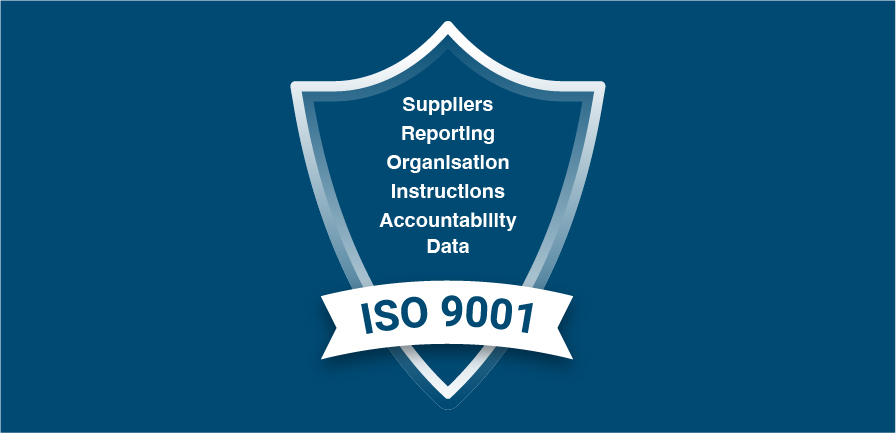
ISO 9001 starts with understanding the process
It is easy to associate ISO 9001 with certificates, procedures, and paperwork, but a more useful way to understand it is to see how a campaign moves through a business from beginning to end.
A client provides a brief, confirms the requirements, approves the artwork, and produces or supplies the materials. The team agrees on distribution areas, plans the campaign, and allocates work to the designated teams. Once distribution starts, you must manage progress along with any issues, and review the campaign afterwards against what was originally agreed.
Each stage affects what follows. A misunderstanding in the brief can lead to incorrect artwork, resulting in the wrong printed materials being distributed. Inaccurate distribution data can send the right leaflet to the wrong area, while imprecise instructions can leave delivery teams unsure what is expected. If you don't record information as the campaign progresses, it may be difficult to understand what happened afterwards.
This is the process approach in practical terms. Instead of treating every task as a separate activity, you consider how the parts connect and whether the overall process produces the result the client expects.
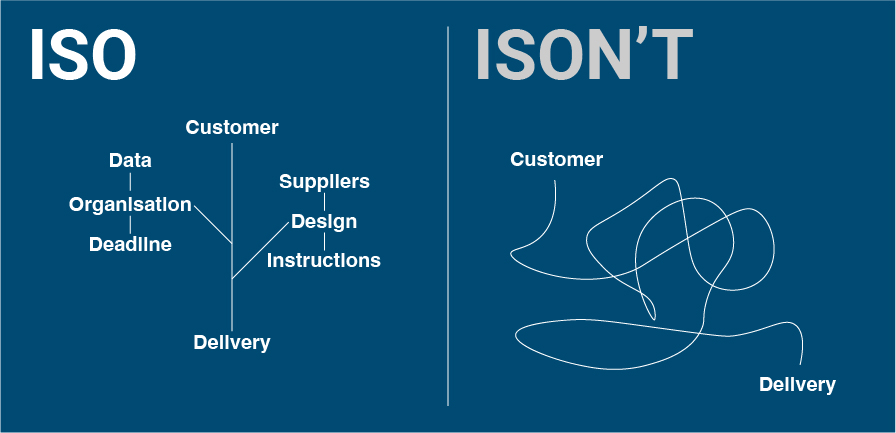
What is risk-based thinking in leaflet distribution?
Risk-based thinking is another part of ISO 9001 that can sound more complicated than it really is. At its core, it means considering what could affect a campaign's outcome and deciding whether anything needs to be done to prevent or reduce the impact.
For a large distribution campaign, that might include checking that the approved artwork is used, confirming distribution data covers the agreed areas, and ensuring sufficient materials for the planned quantity. It can also mean planning for supplier delays, damaged materials, campaign changes, or severe weather that could affect the schedule.
If the client expects detailed reporting, that needs consideration too. The information required at the end of a campaign must come from somewhere, so the process for capturing it needs to be in place during the work.
None of these is revolutionary ideas. They are sensible business practices, but ISO 9001 gives a structured way to ensure important considerations are not delegated to chance or individual memory.
The 2026 edition places greater emphasis on risks and opportunities, encouraging organisations to consider not only what could go wrong but also where there may be opportunities to improve how they work. For a leaflet distribution company, that could mean finding better ways to control campaign information, improving communication between teams, or making reporting more useful for clients.
Where ISO 9001 can make a difference
Several stages in a leaflet distribution campaign can be directly affected by good quality management.
1. Artwork and version control
Take the leaflet artwork. Once a client approves a version, they expect that version to be printed and distributed. If an older file is accidentally sent to print, the delivery team may not question it because they work with the materials supplied.
The issue began before distribution.
A controlled process should specify which artwork is approved, how the current version is identified, and what happens when changes are made. This is especially important when a campaign is amended close to a print or distribution deadline, leaving less room to spot and correct errors.
The purpose is not to create more paperwork but to reduce the chance of preventable mistakes reaching the customer.
2. Distribution areas and data
The same principle applies to geographical targeting. A campaign may cover specific postcode sectors, streets, or neighbourhoods, so the information used to plan distribution must be accurate and clearly communicated to everyone involved.
Inaccurate data is not always obvious during a campaign. Everything can arrive on time, and the distribution can be completed as planned, but if the targeting information was wrong in the first place, the leaflets may have gone to the wrong homes.
For the client, that difference matters. Completing the planned activity does not mean achieving the desired result, which is why quality must be considered from the customer’s perspective as well as the operational one.
3. Materials, suppliers and handovers
Leaflet campaigns can involve several organisations before distribution even begins, including printers, fulfilment suppliers, transport providers, data suppliers and warehouses. Each handover creates another point where information or materials could be delayed, misunderstood, or handled incorrectly.
The suppliers behind a campaign can directly affect its quality, so choosing the right ones matters. We look at reliability, past performance, relevant certifications, and environmental credentials before working with a supplier. We also want to know that they can meet our requirements consistently. Once materials arrive, we check quantities and other important details as needed before passing them on to the next stage of the campaign.
A problem may start with a supplier but still affect the client, so we must manage it as part of the wider process.
4. People, instructions and communication
People are another important part of the equation. Distribution campaigns can involve teams working across different locations and away from the office, which means clear instructions and reliable communication are essential.
Everyone involved must understand what they are expected to do, where they are working, and any campaign-specific requirements. If something changes, that information must reach the people affected, not stay with the person who originally received it.
A process written down in a document is only useful if the people carrying it out understand it and have the information they need.
ISO 9001:2026 also places greater emphasis on people, quality culture, and ethical behaviour, reflecting that effective quality management depends on how people work as well as the processes they follow.
5. Monitoring and reporting
For many clients, one of the most important parts of a campaign is being able to see what happened once distribution was underway. Depending on the campaign and the agreed reporting, this might include confirmation of when and where distribution took place, coverage information, quantities delivered across several areas, and records of any issues that arose.
That information gives the client a clearer view of how the campaign progressed and whether the agreed work was completed. It also provides useful evidence for internal campaign reporting.
Consider reporting before distribution starts. If you need specific information at the end, you need a reliable way to capture it during the campaign rather than reconstructing events afterwards.
What happens when something goes wrong?
Things do go wrong in distribution. A supplier may miss a deadline, an instruction may be misunderstood, weather may affect the schedule, or a campaign change may not reach everyone who needs to know.
You need to address the immediate issue; a good quality process does not stop there. It also examines why the problem occurred and whether anything needs to change.
Perhaps the instructions were unclear, the wrong information was passed on, an important check was missing, or an existing control didn't work as intended. Understanding the cause lets you address the underlying issue rather than repeatedly dealing with the same symptoms.
That distinction matters. If the same problem appears across several campaigns and the response is to fix it each time, the business isn't improving the process. It is becoming better at dealing with a problem that should have been addressed at its source.
Continual improvement in the real world
Continual improvement can sound like management jargon, but the principle is simple. You look at what happened, understand what worked and what did not, make sensible changes, and then see whether those changes improve the result.
In leaflet distribution, that could mean changing how campaign instructions are communicated, adding a check before materials leave a warehouse, improving how distribution data is reviewed, or changing how issues are recorded and followed up.
It can also mean keeping something that worked well and making it part of the normal process.
The value comes from using experience. A campaign should not simply end and disappear into the archive; what you learn from it helps shape the next one.
ISO 9001:2026 continues to identify continual improvement as a core part of quality management.
Does being ISO 9001 certified guarantee a perfect leaflet distribution campaign?
No, and it is important to understand what certification does and does not mean.
ISO 9001 provides a framework for managing quality across a business. It helps organisations establish processes, keep them under control, consider risks and opportunities, address problems, and improve over time. Certification shows an organisation’s quality management system has been assessed against the standard's requirements, but it does not mean every campaign will be free of errors or unexpected problems.
ISO 9001 certification is also not required to implement the standard.
For a client choosing a leaflet distribution company, certification is one factor to consider alongside the company’s experience, communication, reporting, processes, and previous performance. The certificate provides useful evidence, but it is still worth understanding how the business manages quality in day-to-day operations.
What should you ask a leaflet distribution company about quality?
If you are commissioning a leaflet distribution campaign, you do not need a supplier to explain every clause of ISO 9001. Practical questions usually reveal much more about how the company actually operates.
Ask how they make sure the correct artwork is used, how campaign quantities are checked and how distribution areas are confirmed. Find out how changes are communicated to delivery teams, how supplier problems are handled and how a campaign is monitored while it is running. It is also worth asking what happens when something goes wrong, how complaints are investigated and what information you receive once the campaign is complete.
One question can be particularly revealing: what has the company changed as a result of something it learned from a previous campaign?
The answer can tell you whether quality management happens in practice or exists on paper.
So, what does ISO 9001 actually have to do with delivering a leaflet?
The connection is everything that happens around the delivery itself.
Putting a leaflet through a letterbox may take only a few seconds, but getting the right leaflet to the right area, in the right quantity and within the agreed timescale involves planning, data, materials, suppliers, people, communication, monitoring and reporting.
ISO 9001 gives a framework for managing those moving parts. In leaflet distribution, that can mean controlling artwork, checking campaign requirements, managing suppliers, confirming distribution areas, briefing delivery teams, monitoring performance and learning from what happens.
It is not about unnecessarily complicating a simple job. It is about making sure that the processes behind the job are understood, controlled and improved when there is a reason to change them.
You do not need to use ISO terminology every time you make a sensible business decision. Although I am sure someone has written a procedure explaining why you should.
What matters is that the thinking is there.
The leaflet through the letterbox is what the customer sees. The quality of everything before and after that point is what makes the campaign reliable.
That is the real connection between ISO 9001 and leaflet distribution.
FAQs
1. What does ISO 9001 mean for a leaflet distribution company?
ISO 9001 delivers a structured approach to managing quality across the business. For a leaflet distribution company, this can cover everything from checking campaign requirements and controlling artwork to managing distribution areas, suppliers, delivery teams, reporting and customer feedback. The aim is to make sure the processes behind a campaign are properly managed and continually improved.
2. Does ISO 9001 guarantee that every leaflet will be delivered correctly?
No. ISO 9001 certification does not guarantee that every individual delivery will be completely free from errors or unexpected problems. It shows the organisation has a quality management system to manage processes, identify risks, address problems, and improve how it works. The way those processes are applied in practice remains important.
3. How does risk-based thinking apply to leaflet distribution?
Risk-based thinking means considering what could affect a campaign's success before and during the work. This could include incorrect artwork, inaccurate distribution data, material shortages, supplier delays, unclear instructions, poor weather or problems affecting a particular delivery area. Identifying these risks early allows the business to put sensible controls in place.
4. Why is quality control important in leaflet distribution?
Quality control ensures the campaign stays in line with what the client asked for. That means checking the artwork and quantities, making sure the agreed areas are clear to the delivery teams, and monitoring the campaign as it progresses. Any problems need to be picked up and dealt with, not left until the end. Otherwise, a campaign can be marked as complete without actually meeting the initial version brief.
5. What should I ask a leaflet distribution company about ISO 9001?
Rather than simply asking whether a company has ISO 9001 certification, it can be useful to ask how its quality processes work in practice. For example, you could ask how artwork is controlled, how distribution areas are checked, how problems are recorded and investigated, what campaign reporting is available and how lessons from previous campaigns are used to boost future work. These questions can give you a better understanding of how quality is managed day-to-day.
Clients can also get a closer look at how we manage their campaign. Depending on what is agreed, this might mean joining a planning call, receiving progress updates and seeing some of the records used during the campaign. We can also arrange access to relevant sustainability certificates, campaign debriefs, or a walkthrough of our quality procedures where useful.
The idea is simple. Rather than asking clients to take our word for it, we are happy to show them how the process works and what we do to keep campaigns on track.
