
In March 2026, Custom Garden Rooms partnered with Mr Flyer to promote its new Hemel Hempstead show site through a targeted leaflet distribution campaign. The final list covered 20,327 households across the selected postcode areas, giving Custom Garden Rooms a defined audience for its Hemel Hempstead showroom campaign. The campaign combined demographic targeting, seasonal timing and two QR codes designed to encourage catalogue browsing or VIP showroom bookings. The reported results included five completed sales and £125,000 in revenue, with a stated return on investment of 4,981%.
In February 2026, Custom Garden Rooms, a garden room specialist based in Telford, appointed Mr Flyer to help raise awareness of its new showroom in Hemel Hempstead. With six garden rooms and a full annexe on display, the site let prospective customers experience the designs, compare options, and assess how additional garden space could work for their homes.
The challenge was to attract relevant visitors from the surrounding area, particularly homeowners with suitable outdoor space who were considering a garden room or annexe. Mr Flyer worked with the client to develop a targeted leaflet distribution campaign that put the showroom in front of the right households and gave recipients a clear next step, whether that meant browsing the online catalogue or arranging a personal consultation.
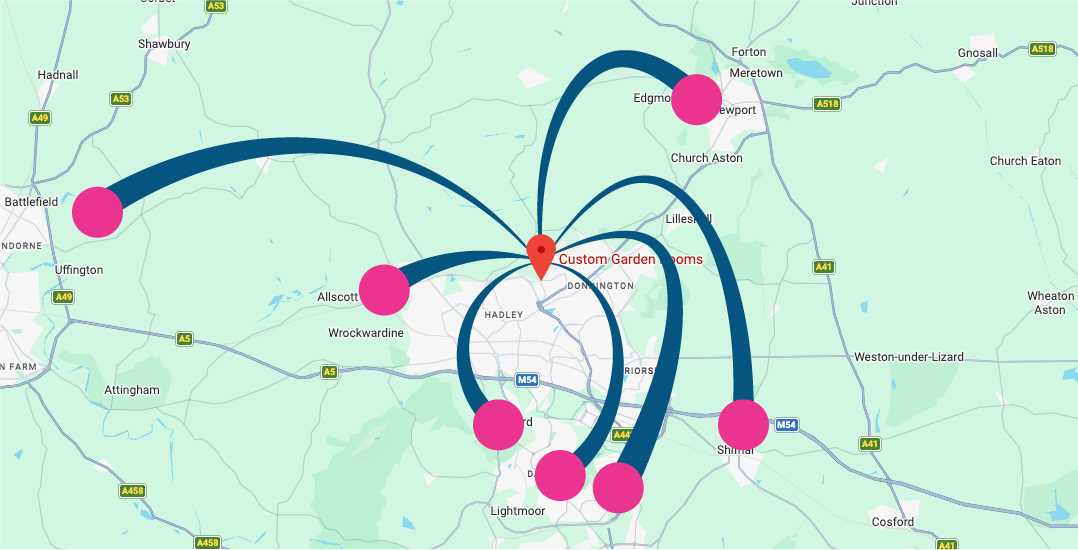
For a high-value home improvement, reaching the right households matters as much as the number of leaflets distributed.
Working with Custom Garden Rooms' Head of Marketing, Bec Bradbury, Mr Flyer's data team identified nine postcode areas around St Albans and Watford, within approximately 30 miles of the Hemel Hempstead show site.
The team selected residential properties based on factors such as property value, ownership status and available garden space. The team excluded flats, rental properties, and homes with gardens unsuitable for a garden room from the mailing list. This gave the campaign a more defined audience of households whose properties were better suited to the product.
This approach narrowed the campaign to 20,327 households, helping Custom Garden Rooms concentrate its marketing budget on a more relevant local audience.
The campaign was scheduled for early March, when homeowners may begin planning garden improvements and outdoor projects ahead of spring and summer.
This allowed Custom Garden Rooms to showcase its products as people considered how to make better use of their homes and gardens.
Seasonal timing was one part of the wider strategy. By combining an appropriate campaign window with carefully selected postcodes, the aim was to reach relevant households when a garden room could be a timely consideration.
The leaflet focused on how a garden room could meet different home needs, from creating a dedicated workspace to adding space for exercise or accommodating guests. Rather than leading with prices or promotions, the messaging gave homeowners practical ideas to make better use of their garden space without extending the main house.
The creative highlighted three potential uses:
By showing these different possibilities, the leaflet helped prospective customers picture how a garden room may fit their needs. It emphasised the product's lifestyle and space benefits, rather than a price-led sales message.
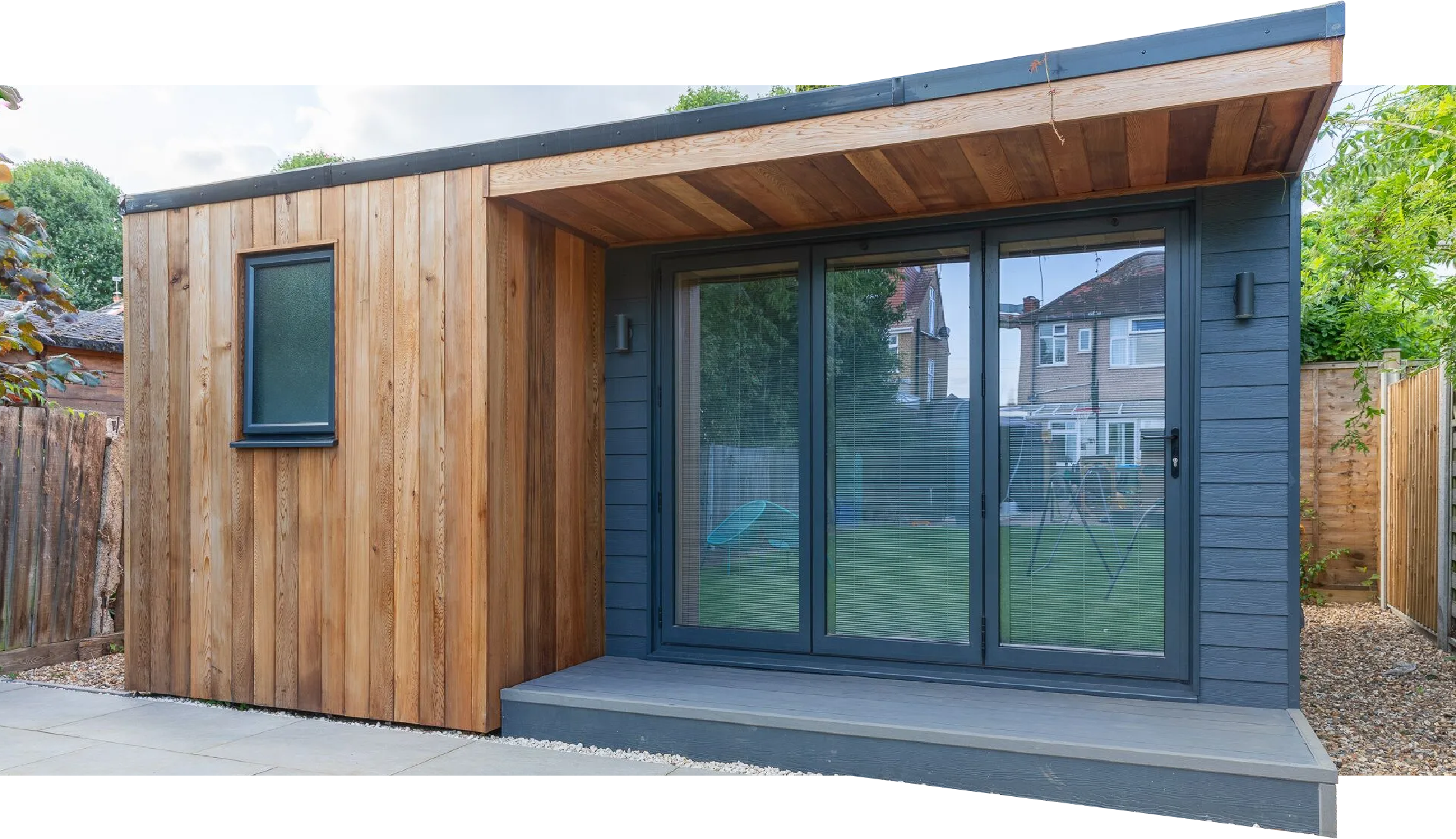
The leaflet included two QR codes, giving recipients different ways to engage with Custom Garden Rooms.
This approach connected printed marketing with digital engagement. It also gave recipients a choice: research the products independently or take a more immediate step toward a purchase.
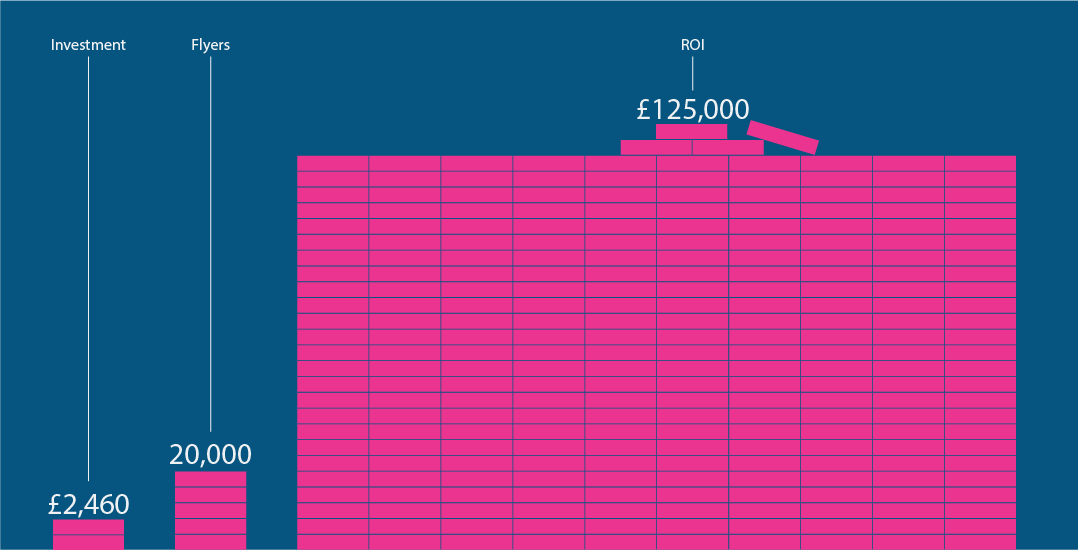
The campaign generated five completed sales and £125,000 in revenue from 20,327 leaflets distributed.
For a high-value product such as a garden room, the campaign shows how audience targeting, relevant creative, and a simple response mechanism can work together.
The results reported for the campaign were:
For this campaign, the key measure was how many sales followed the leaflet distribution, rather than the number of homes reached alone. Recording enquiries and completed purchases alongside distribution figures gives businesses a clearer picture of how their campaigns perform and where marketing spend is generating a return.
The Custom Garden Rooms campaign highlights four considerations for businesses planning a leaflet distribution campaign.
For businesses selling higher-value products or services, these principles can help make a leaflet campaign more focused, measurable and commercially relevant.
Every campaign starts with a different commercial objective. Whether you want to generate local enquiries, promote a new showroom or reach a specific audience across multiple postcode areas, the right approach starts with understanding who you want to reach.
Mr Flyer supports businesses with campaign planning, demographic targeting, artwork, print and leaflet distribution around the UK.
Want to reach the right households for your next campaign? Contact Mr Flyer to discuss your audience, locations and objectives, and see how a targeted leaflet distribution campaign could support your business.