
Published by:
Matt Wright
Date:
October 28, 2026
Business Development Manager at The Flow Group and Mr Flyer, overseeing sales and marketing strategies.
Category:
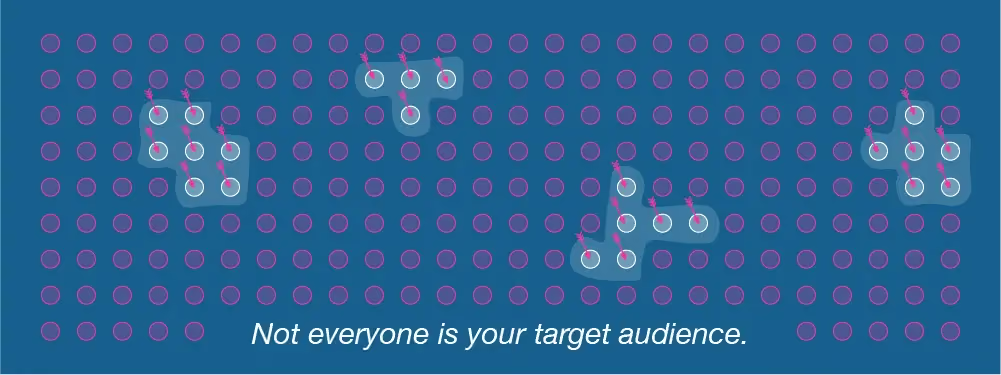
It might sound obvious, but a key part of the success of any leaflet distribution campaign is who you reach. Not every household will be right for you, but considering who is most likely to buy from you (or who is most likely to influence the purchasers) will help increase the likelihood of a strong response. Poor targeting can mean wasted print costs, wasted delivery, and a very poor return on investment. Simply put, bad targeting is expensive - and many businesses don’t even realise it.
Imagine sending 10,000 leaflets to 10,000 randomly selected local homes. Just because they’re local to you, doesn’t mean they’re the best choice. In theory you could get a response from any postcode. But if your services are exclusive to homeowners for example, and only 20% of your chosen postcode are homeowners, you are potentially wasting 80% of your leaflet spend. That’s 80% of your budget down the drain - plus the opportunity cost of missed customers. Add in potential errors like duplicates, and it all adds up very quickly.
Absolutely. Sending leaflets to the wrong audience can make your business look unprofessional. Customers might perceive your brand as careless, which can harm trust and make it harder to build long-term relationships. Stronger targeting helps your marketing look smart - which is exactly the impression you want to leave.
Two words: increased likelihood. Leaflets are best suited to a fairly wide audience. Postcode sectors on average have 3,500 homes, which often covers quite a broad range of different audiences, from low-income families in £150k rented homes, to high income professionals in a new-build estate. It’s therefore not generally possible to find a perfect postcode. Instead, we look at where we can increase the likelihood of reaching the right audience by measuring the percentage of each of your target demographics and comparing the options from the other postcodes available to find the best choice. We can also consider other factors such as proximity and alternative potential audiences. If your target audience is “niche”, consider Direct Mail instead.
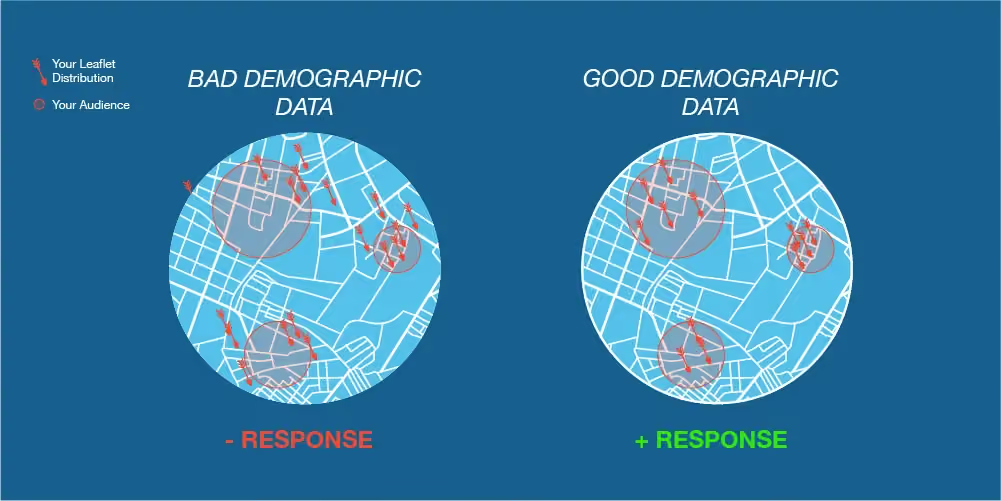
A conceptual comparison graphic splitting a target audience map into disorganized "Bad Data" with mixed demographics versus streamlined "Good Data" targeted by high-likelihood customer segments.
Ask yourself whether your distributor cares more about volume or results? Do they care about your business and your success? Do they seek to help you by offering solutions that you may not have considered or try to find a better way? Do they have a proven track record with high quality reviews? The chances are, if they tick the right boxes in these areas, then they will care about getting your targeting right.
In short: yes. Quality data reduces waste, increases your response rates, and ultimately boosts your ROI.
Choosing a distributor who wants to build your brand and your business, and help you get the most success from your campaign possible will inevitably mean finding a partner who also helps you with your targeting. You know your business and also who your best customers are most likely to be – we’ll take that knowledge and couple it with our toolkit to help you find the best postcode choices for maximising your response rate.
Read our next blogs:
Posted by
Matt Wright
Posted by
Matt Wright