Leaflet Distribution as a Marketing Strategy: is it right for your business?
0 minute read
Leaflet distribution is sometimes treated as a simple bit of marketing.
Print some flyers. Pick a few postcodes. Get them through some doors. Job done. But if that is your approach, you could be missing the point.
A successful leaflet campaign starts before the first leaflet reaches a letterbox. You need to know who you are trying to reach, where they live, what you want them to do, and how you will measure the result.
That is where leaflet distribution becomes more than a delivery service. It becomes a marketing strategy.
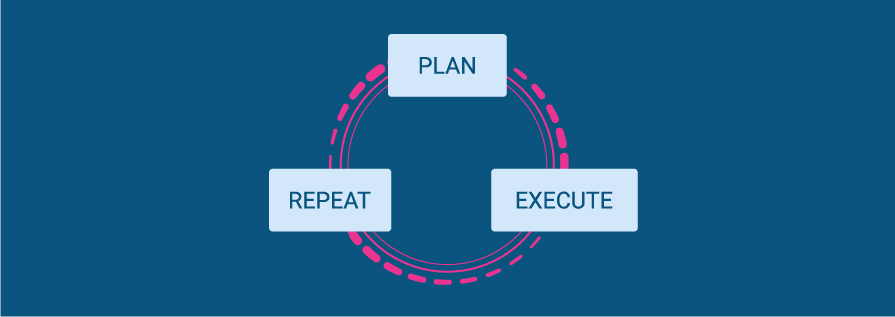
At Mr Flyer, our approach is built around Plan. Execute. Repeat. We look at your goals, identify the right audience, create actionable artwork, print your campaign and distribute it where it is most likely to make an impact. We then use what we learn to help shape the next campaign.
So, is leaflet distribution right for your business? Let's take a closer look.
Why use leaflet distribution as part of your marketing strategy?
We are constantly surrounded by digital marketing, from emails and social media to search results and online advertising. With so much competition for attention, it can be easy to assume that physical marketing has become less relevant. In reality, it simply means businesses need to think more carefully about how different marketing channels can work together and where print can add something that digital alone cannot.
JICMAIL, the Joint Industry Committee for Mail, tracks how people receive and respond to mail across the UK, including Door Drops. Its research looks at factors such as reach, frequency, attention and the response generated by campaigns. This gives businesses a clearer picture of how physical mail performs as part of a wider marketing strategy, rather than simply seeing it as printed material.
There is also a useful distinction here.
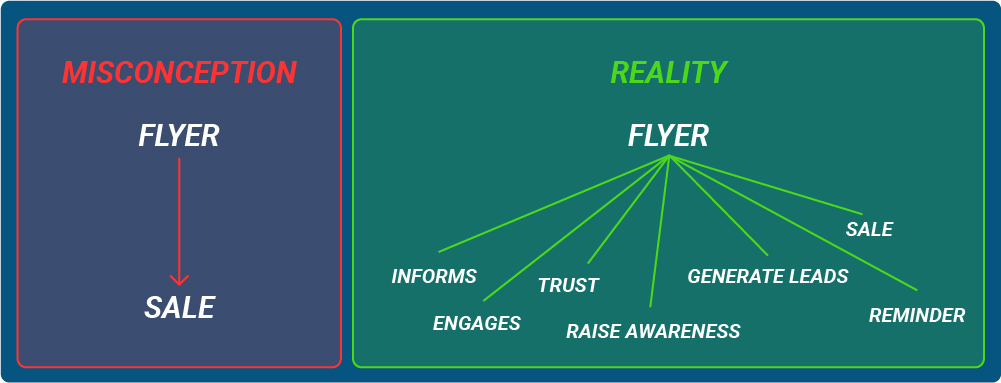
A leaflet does not need to generate an immediate sale to do its job. It might introduce your brand to someone new, remind an existing customer you are still there, encourage a website visit, or sit on a kitchen table until the problem you solve becomes relevant.
That is why the strategy surrounding the leaflet matters.
What is leaflet distribution?
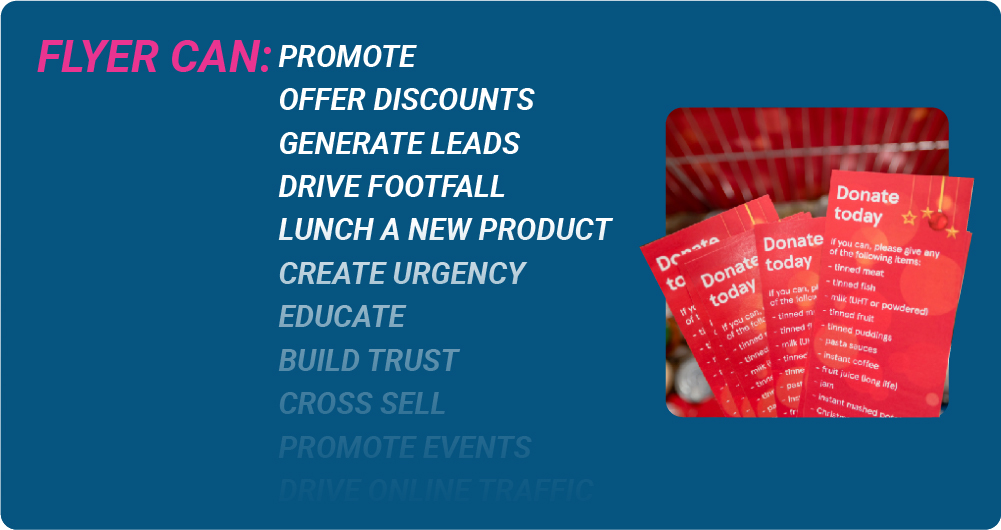
Leaflet distribution, sometimes referred to as door drop marketing, involves delivering printed promotional material directly to households or businesses within a selected geographical area. It is used by a wide range of organisations, from independent local businesses to national brands, to introduce services, promote offers, generate enquiries and build awareness within specific communities.
The format itself is relatively simple, but that does not mean the marketing behind it has to be.
A leaflet might promote a new restaurant, encourage homeowners to request a building quote, introduce a local gym, or advertise a property service. In each case, the printed leaflet is the means of communicating the message. The real strategy is deciding who should receive it, what they need to know, and what action you want them to take.
This is why we believe it is useful to think of the leaflet as one part of a wider campaign rather than the campaign itself. The quality of the targeting, the relevance of the message and the way the campaign is measured can all influence whether the distribution achieves what the business set out to do.
Why should businesses consider leaflet distribution?
Marketing has changed over the last few years, but physical marketing remains relevant. Businesses now have more ways to communicate with potential customers than ever, making the right channel mix increasingly important.
JICMAIL, the Joint Industry Committee for Mail, measures how people interact with physical mail in the UK, including Door Drops. Its research looks at reach, frequency, attention and the results generated by mail campaigns. This gives businesses independent data on how physical marketing performs, helping them understand whether people notice, keep and respond to printed material.
One of the advantages of a leaflet is that it enters the physical environment of the person you are trying to reach. It may be seen when it arrives, picked up later, placed somewhere visible or passed to another member of the household. That is quite different from a digital advert that can disappear from someone's screen almost immediately.
That does not mean every leaflet will be read or every campaign will produce an immediate sale. No responsible marketer should promise that. It means leaflet distribution gives businesses another way to put their message in front of a defined audience, especially when location matters to the purchase decision.
Print does not have to compete with digital marketing either. A leaflet can introduce a business and encourage someone to visit its website, use a booking system, view an offer or find out more online. Used in this way, print becomes another step in the customer journey, working alongside digital channels rather than sitting separately from them.
Who is leaflet distribution suitable for?
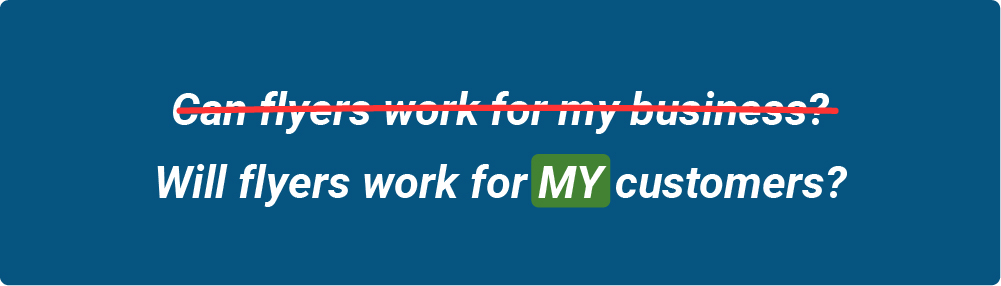
Leaflet distribution makes the most sense when a business knows where its potential customers are located. This is especially relevant to local and regional businesses, where distance between customer and business can influence buying decisions.
A restaurant, for example, may want to reach households within a reasonable travelling distance of its premises. A garden maintenance company may want to concentrate on residential areas where there is a strong concentration of suitable properties. An estate agent could choose areas based on the type of properties it wants to acquire and the homeowners it is trying to reach.
The same principle applies to businesses such as Gyms, Home Improvement Services, broadband provides, trades, automotive companies, retailers and local attractions. The industries are very different, but each can have a customer base at which location plays an important role.
Leaflet distribution can also be useful when a business has something specific to announce. A new premises, new service, seasonal promotion, local event or product launch can all provide a clear reason for contacting households in a particular area.
The key is that the audience should connect to what you offer. Choosing the largest distribution area is unlikely to be the best use of budget if many households have little reason to become customers.
When might leaflet distribution not be the right choice?
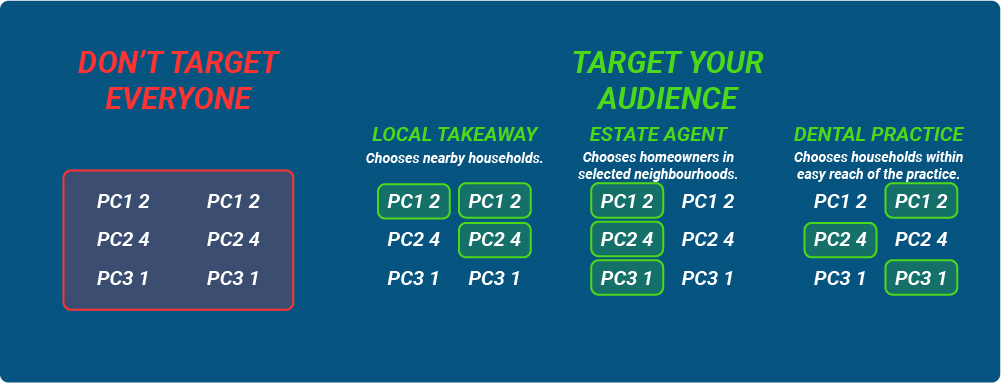
It is just as important to consider when leaflet distribution may not be appropriate. No marketing channel works equally well for every business, and there is little value in distributing thousands of leaflets simply because there is a budget available.
If your potential customers cannot be meaningfully identified by location, it may be more difficult to make geographical distribution work efficiently. Similarly, if the product or service has a very broad audience but the campaign has no clear message or reason for someone to respond, the distribution itself is unlikely to solve the problem.
It is also worth being realistic about what you expect from the campaign. If you are looking for immediate sales from one distribution, without a clear offer, tracking method or follow-up activity, you may be setting the campaign up with unrealistic expectations.
The question should not simply be whether you can afford to distribute leaflets. It should be whether there is a sensible marketing reason for doing so.
Start with your marketing objective
Before deciding how many leaflets you need, start by deciding what you want them to achieve.
That might be generating enquiries, increasing bookings, encouraging people to visit a premises, promoting a new service or simply increasing awareness within a particular area. The objective will influence the audience you target and the message you put in front of them.
For example, a local gym trying to generate new memberships might use a specific introductory offer and direct people to an online booking page. An estate agent looking to increase valuations might focus the leaflet around the local property market and provide a straightforward route for homeowners to request an appraisal.
The leaflet itself can look completely different in each situation because the marketing objective is different.
This is one reason we encourage businesses to think about the campaign before thinking about the print. Once you know what you are trying to achieve, decisions about audience, distribution areas, design and measurement become much easier.
Understand who you are trying to reach
One of the biggest opportunities with leaflet distribution is the ability to choose where your campaign goes. But geographical targeting becomes much more useful when it is connected to an understanding of the people who live in those areas.
For some businesses, location alone may be enough. If you run a restaurant that mainly serves customers within a few miles, for example, a sensible distribution radius may be the most important consideration.
For other businesses, additional demographic information can make the targeting more specific. Factors such as household composition, age, income, lifestyle and property characteristics can help identify areas that are more closely aligned with an ideal customer profile.
At Mr Flyer, we use Experian data to help businesses understand the demographics within different areas and identify households that may be relevant to their campaign. This gives us a stronger basis for recommending distribution areas than simply looking at a map and choosing a few convenient postcodes.
The objective is not to make targeting unnecessarily complicated. It is to make sure there is a clear reason behind the areas selected.
Choosing the right distribution areas
It can be tempting to choose areas based on familiarity. Perhaps your business is based in a particular town, so you decide to distribute throughout the surrounding postcodes.
That may be perfectly appropriate, but it is worth asking whether every part of that area contains the customers you are looking for.
Imagine a business that provides premium home improvement services. Rather than distributing evenly across an entire town, it may be more sensible to identify residential areas with a higher concentration of suitable properties and households.
Equally, a business offering a highly local service may find that a smaller radius produces better opportunities than trying to cover a much wider area.
There is no universal answer because the right distribution area depends on the business. The important part is having a reason for selecting it.
How many leaflets should you distribute?
The answer should come from the audience and the campaign objective rather than from an arbitrary target number.
A business might have a budget of £5,000 and ask how many leaflets that will buy. A better question is how that budget can be used to reach the most relevant potential customers and give the campaign a realistic opportunity to produce results.
Sometimes that means reaching a large number of households. Sometimes it means concentrating the budget on a smaller number of carefully selected areas.
It is also worth considering whether you are planning a single campaign or a series of distributions. If the objective is to build awareness over time, the strategy may look very different from a one-off campaign designed to promote a particular event or seasonal offer.
Typical campaign timelines can vary depending on your goals and the scale of your campaign. As a general guide, planning and preparation usually takes between 2 and 4 weeks. This includes time to define your objectives, select the right audience and areas, design and approve the creative, and organise print and distribution logistics. The execution phase, which covers print production and actual leaflet delivery, commonly takes 1 to 2 weeks depending on the size of the distribution area and the method chosen. After distribution, it is good practice to allow 2 to 4 weeks for responses, measurement and follow-up, as results can come in over time. For ongoing or repeat campaigns, the planning process can become much quicker once your main artwork, targeting and processes are already in place. Allowing enough time for each stage in your marketing schedule makes it easier to manage the campaign and keep everything running smoothly from start to finish.
At Mr Flyer, our approach is based around Plan. Execute. Repeat. The idea is simple. Plan the campaign properly, put it into action, review what happened and use what you learn to inform the next one.
That gives businesses an opportunity to refine their targeting and messaging rather than expecting the first distribution to provide every answer.
Creating a leaflet that people want to read
Good targeting can get your leaflet into the right home, but the creative still needs to do its job.
One of the most common problems we see is businesses trying to include everything. They want to explain every service, list every benefit, include every contact method and tell the reader the entire story of the company.
The result can be a leaflet that contains plenty of information but gives the reader no obvious reason to act.
A stronger approach is to decide what the most important message is and build the design around it. What is the main benefit you are offering? What problem are you solving? What would make the person reading the leaflet consider taking the next step?
The wording should be easy to understand, and the design should make the important information immediately visible. Your audience should not have to work out what the business does or search the leaflet to find out what they are supposed to do next.
The call to action is particularly important. Whether you want people to visit a website, book an appointment, claim an offer, call your team or visit your premises, make that action clear.
A QR code can also provide a useful bridge between the physical leaflet and your digital marketing. Rather than expecting someone to type a long web address into their phone, you can take them directly to a relevant page.
Think about the customer journey
A leaflet should not necessarily be the end of the marketing journey.
Someone might receive your leaflet, scan the QR code and visit your website. They might not buy anything immediately, but they may remember your business when they need the service later. Another person might take the leaflet into the house and show it to their partner before deciding what to do.
Thinking about these different journeys can help you create a more realistic campaign strategy.
For example, if your objective is to generate bookings, the leaflet could take someone directly to an online booking page. If your objective is to generate enquiries, it could lead to a dedicated landing page explaining the service and providing a simple enquiry form.
The more closely the next step fits the message on the leaflet, the easier it is for the customer to move from interest to action.
Choosing the right distribution method
There are several ways of getting printed marketing material into people's hands, and the right option depends on what you are trying to achieve.
Door-to-door distribution is particularly useful when you want to target households within defined geographical areas. The campaign can be planned around particular postcodes, neighbourhoods or demographic characteristics.
Solus distribution can be appropriate when you want your leaflet delivered on its own rather than alongside other promotional material. This gives your campaign greater exclusivity within the letterbox.
Shared distribution can be a more cost effective option, as your leaflet is delivered alongside other promotional materials from businesses that are not direct competitors. This can work well for campaigns where keeping costs down and reaching a wider local audience are the main priorities.
Direct mail is different again because the communication is addressed to a specific household or individual. This can allow for greater personalisation and more precise use of customer data.
None of these approaches is automatically better than the others. The right choice comes back to the audience, the objective and the budget.
Make your campaign measurable
One of the most useful things you can do before launching a leaflet campaign is decide how you are going to judge its performance.
If someone contacts you after seeing your leaflet, you want to have some way of identifying that connection. Otherwise, you may find yourself several weeks later asking whether the campaign generated anything and relying on guesswork.
There are several simple ways to improve measurement. You could use a campaign-specific QR code, a dedicated landing page, a promotional code or a unique telephone number. You can also ask new customers how they heard about you when they make an enquiry or booking.
The right method depends on your business. A restaurant might use a promotional code. A healthcare provider could use a dedicated booking page. A trades business might use a specific telephone number or ask about the source of the enquiry.
It is also important not to assume that every response will happen immediately. Someone may keep your leaflet for a period of time before contacting you, particularly when the service is something they only need occasionally.
JICMAIL's research is useful in this respect because its measurement of mail considers more than an immediate response. It looks at areas including reach, frequency, attention and commercial outcomes, providing a broader picture of how physical marketing may contribute to a customer journey.
Why repeating your campaign can matter
One of the easiest mistakes to make is to run one leaflet campaign, wait a short while and decide whether the entire idea has worked.
Marketing rarely gives you such a clean answer.
A person who has never heard of your business may not respond the first time they see your name. They may recognise it the second time and become interested the third time. Repeated exposure might also help establish familiarity, mainly for businesses that are competing with several local alternatives.
That does not mean you should repeatedly distribute the exact same leaflet regardless of what happens. Repetition should give you an opportunity to learn.
Perhaps one area generated more enquiries than another. Perhaps one offer attracted considerably more interest. Perhaps the campaign produced website visits but very few enquiries, suggesting that the landing page or offer needs attention.
For example, we worked with a local fitness centre that distributed leaflets across three neighbourhoods, using two different offers: a free guest pass and a discounted membership rate. Tracking codes were included to measure the response to each offer. The first campaign showed that the discounted membership generated more sign-ups, particularly in areas closer to the gym, while the free pass was less successful at turning interest into memberships.
For the next campaign, we focused on the areas that had performed best and changed the main message on the leaflet to put greater emphasis on the discount. The gym then saw a 40% increase in membership enquiries compared with the first campaign. It was a good example of how tracking results can help businesses make practical changes and improve the performance of future leaflet campaigns.
This is where the Plan. Execute. Repeat approach becomes valuable. Each campaign provides information that can be used to make the next one more considered.
Common mistakes businesses make
A common mistake is focusing too heavily on the number of leaflets being distributed. Businesses can become focused on achieving a particular volume because it feels like a tangible measure of activity. But 20,000 poorly targeted leaflets are not necessarily more valuable than 10,000 carefully targeted ones.
One more mistake is choosing areas simply because they are close to the business. Location matters, but proximity alone does not tell you whether the households in that area are suitable customers.
The creative can also let a campaign down. If the leaflet contains too much information, the main message becomes difficult to identify. If there is no clear call to action, the reader may understand what you offer but have no obvious reason or method to take the next step.
Finally, businesses sometimes fail to build measurement into the campaign. Without some form of tracking, it becomes much harder to understand what happened and what should change next time.
How leaflet distribution can work with digital marketing
There is no reason to choose between print and digital marketing.
In many cases, they can work together quite naturally.
A leaflet can introduce your business to someone at home, while a QR code can take them to your website. A campaign could promote an online offer, encourage people to make a booking or direct them towards a specific product page.
Someone may also see your leaflet and later search for your business online. By the time they reach your website, the physical campaign has already created some familiarity.
This is why we prefer to think about marketing channels as parts of the same customer journey. Your leaflet does not have to generate the entire sale. Its job might be to create awareness and encourage the next step.
The website, landing page, social media, email marketing or sales team can then take over from there.
Best practices for leaflet distribution
The most successful campaigns tend to have a clear reason behind every major decision. The audience is defined before the distribution areas are selected, and the message is written with that audience in mind rather than simply listing everything the business offers.
It is also worth testing where possible. If you have two strong offers or messages, consider whether they can be tested over various areas. If you have a choice between several potential distribution locations, start by understanding the characteristics of those areas rather than choosing based purely on size.
Give the reader a clear reason to respond and make that response straightforward. A leaflet that says "visit our website" without explaining why is asking the customer to do work without giving them much incentive.
Finally, look at the campaign as something that can improve over time. Review the enquiries, bookings, website activity and other available data, then use what you have learned when planning the next distribution.
Is leaflet distribution still relevant?
There is a simple answer to this question.
Yes, but it needs to be approached as marketing rather than simply distribution.
Businesses have access to an enormous number of digital channels, but that does not mean every potential customer is reached in the same way. Physical marketing can provide another opportunity to put a business, service or offer directly into people's homes, particularly when the audience can be identified geographically.
The strength of a leaflet campaign comes from how well the different parts work together. If you know who you want to reach, understand where those people are, create a relevant message, provide a clear next step and measure what happens afterwards, leaflet distribution becomes much more than putting paper through letterboxes.
It becomes a planned marketing activity with something you can learn from.
And that is really the difference between a leaflet drop and a leaflet marketing campaign.
Is leaflet distribution right for your business?
If your customers are concentrated within particular areas, leaflet distribution is certainly worth considering. It can be particularly useful for companies that rely on local customers, have a physical location, provide services within a defined area or have a new product, service or offer they want to introduce.
But you do not need to work all of this out on your own.
At Mr Flyer, we can help you look at your objectives, identify the audiences and areas that make sense, and then bring the creative, print and distribution together into one campaign.
Our approach is simple: Plan. Execute. Repeat.
That means thinking about what you want to achieve before you print, putting the campaign into action and then using what you learn to make the next campaign stronger.
If you are considering leaflet distribution but are not sure where to begin, talk to Mr Flyer about your campaign. Our typical process starts with an initial discovery call to understand your objectives, target audience, and desired outcomes. We then provide a tailored proposal, including recommendations and estimated costs. Once everything is agreed, we outline a clear timeline for planning, design, print and distribution, so you know what to expect at each stage. Throughout, we aim to keep the process straightforward and transparent, helping you work out whether this is the right approach for your business and, if it is, how to make your budget work as hard as possible.
Frequently asked questions
Is leaflet distribution an effective marketing strategy?
Leaflet distribution can be an effective marketing strategy when it is properly targeted and connected to a clear objective. The results will depend on factors such as the audience, distribution area, creative, offer, timing and how the campaign is measured. While individual outcomes can vary, typical response rates for leaflet campaigns in the UK often range from 1 to 2 percent, with some well-targeted and well-executed campaigns seeing higher results. The return on investment can also range widely depending on the quality of targeting and campaign objectives. Like any marketing channel, it should be tested and reviewed rather than treated as a guaranteed source of sales.
What types of businesses use leaflet distribution?
Leaflet distribution can work particularly well for businesses with a geographical customer base. This includes gyms, estate agents, trades, home improvement companies, healthcare providers, automotive businesses, retailers, beauty businesses and local attractions. It can also be useful for businesses launching a new service or opening a new location.
How many leaflets should I distribute?
There is no universal number. The right quantity depends on your target audience, available budget, geographical coverage and objectives. A smaller campaign aimed at carefully selected households may be more useful than a much larger campaign with little targeting.
How do I choose the right areas?
Start with your ideal customer and consider where people matching that profile are most likely to live. Depending on your business, factors such as age, income, household type, lifestyle, property characteristics and distance from your premises may all be relevant.
Should I distribute leaflets more than once?
For many businesses, repeat campaigns are worth considering. Repeated activity gives customers more opportunities to recognise your business and allows you to improve the campaign based on what you learn from previous distributions. The frequency should depend on your audience, objectives and budget rather than following a fixed rule.
How much does leaflet distribution cost?
The cost depends on factors such as the number of leaflets, distribution area, distribution method, print specification, targeting and any additional services required. As a general guide, a small local campaign targeting 5,000 to 10,000 households might range from £300 to £800 for basic print and distribution, while a medium campaign of around 20,000 to 30,000 could cost between £1,000 and £2,000, depending on the complexity and level of targeting involved. Larger or more highly targeted campaigns, or those requiring solus or direct mail distribution, can be higher. Design and creative services, as well as extra tracking features, may be additional. Rather than looking only at the cost per thousand, consider the overall campaign and whether the distribution is reaching the people most likely to become customers.
Plan your next leaflet campaign
A good leaflet campaign does not start with a printer or a postcode map. It starts with understanding your customer.
Once you know who you want to reach and what you want them to do, the rest of the campaign becomes much easier to plan. Your distribution areas can be selected with a purpose, your creative can be written for a specific audience, and your results can be measured against an objective.
That is the approach we take at Mr Flyer.
We bring together targeting, creative, print and distribution to help businesses turn leaflet marketing into something they can properly plan, measure and improve.
Plan. Execute. Repeat.
If you are thinking about your next leaflet campaign and want to know where to start, get in touch with Mr Flyer. We will help you look at your audience, your objectives and your budget before deciding what approach makes the most sense.
